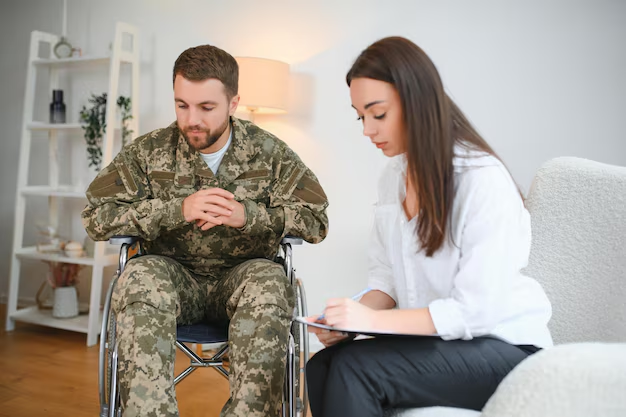
Fast Relief Programs Veterans Can Use Right Away
Many veterans looking for fast relief are dealing with immediate needs: no money coming in, past-due rent or utilities, or an urgent medical or mental health issue.
There are real programs designed for emergencies, but they are spread across Veterans Affairs offices, state agencies, and vetted non‑profits, and each has its own process and delays.
Where Veterans Can Go First for Fast Relief
The main official systems that handle quick-help programs for veterans are:
- U.S. Department of Veterans Affairs (VA) – especially your local VA medical center and VA regional benefits office.
- County or state Veterans Service Office (VSO) – often called “County Veterans Service Office” or “State Department of Veterans Affairs.”
- Veterans Crisis Line / emergency mental health services – accessed through VA.
Quick summary (who to contact for what):
- Immediate emotional/mental health crisis: Contact the Veterans Crisis Line or go to the emergency room at a VA medical center.
- Urgent medical issue and you’re enrolled in VA health care: Call the nurse advice line at your VA medical center and ask about same‑day services.
- No money for food or rent this month: Contact your local VA medical center’s social work department and your county Veterans Service Office.
- Facing eviction, foreclosure, or homelessness: Ask the VA medical center or VSO about rapid rehousing and Supportive Services for Veteran Families (SSVF) programs.
- Sudden job loss or bills piling up: Talk to a VSO about emergency financial assistance programs and expedited claims options.
Rules, eligibility, and speed of help vary by state, discharge status, and service history, so you’ll usually need to confirm with your local offices.
Key Terms to Know
Key terms to know:
- VA medical center — Large VA hospital facility where you can access emergency, urgent, and same‑day services plus social work support.
- VSO (Veterans Service Officer) — Accredited representative (usually at county or state offices) who helps you apply for VA and other benefits at no cost.
- SSVF (Supportive Services for Veteran Families) — A VA‑funded program, run by non‑profits, that can provide rapid housing help, temporary financial aid, and case management for eligible veteran households.
- Hardship / expedited claim — A request to VA to move your benefits claim faster because of extreme financial or medical need; not guaranteed, but sometimes approved.
Documents You’ll Typically Need
Documents you’ll typically need:
- DD‑214 or other separation papers to prove qualifying military service.
- Photo ID (state driver’s license, state ID, or VA ID card) to verify identity.
- Proof of financial hardship, such as past‑due rent or utility notice, eviction notice, foreclosure letter, disconnection notice, or recent bank statements.
Having clear copies (paper or phone photos) ready often speeds up both VA and non‑profit emergency assistance.
Step‑by‑Step: How to Access Fast Relief
These steps start with what you can do today and what typically happens next.
1. Contact an Official Veteran Help Point Today
Your most direct starting points are:
- Local VA medical center social work department (for housing, food, utilities, and health-related emergency help).
- County or state Veterans Service Office (for emergency financial help programs, claims, and fast-tracking options).
Concrete action you can take today:
Call your nearest VA medical center and say: “I’m a veteran in urgent financial/health need and I need to speak with a social worker or case manager today.”
If you aren’t sure what’s closest:
- Search for your nearest “VA medical center” and “[your county] veterans service office” and confirm the phone number ends in .gov to reduce scam risk.
- Call the number on the official site and ask to be connected to social work (VA) or a Veterans Service Officer (county/state).
What to expect next:
You’re typically screened with a few questions about service history, current situation, and safety (for example, whether you’re at risk of harm or homeless).
From there, they usually either schedule a same‑day or near‑term phone/office appointment or connect you directly with a social worker if one is available.
2. Gather Basic Proof of Service and Hardship
Once you reach a VA social worker or VSO, they will almost always ask for:
- Your DD‑214 or other proof of service.
- Photo ID.
- Evidence of the emergency – for example:
- Eviction or pay‑or‑quit notice.
- Utility shutoff notice or disconnection warning.
- Medical bills, prescription costs, or proof you can’t pay for transportation to care.
Some programs also commonly ask for:
- Recent pay stubs or a letter showing you lost your job.
- Bank statements for the last 1–3 months.
- Lease or mortgage statement if housing help is needed.
Concrete action:
While you are on the phone or before your first visit, collect these documents into one folder or envelope, or take clear photos on your phone so you can send or show them quickly when asked.
What to expect next:
The social worker or VSO typically uses this information to determine which fast-relief options you qualify for, such as emergency housing placements, SSVF referrals, food support, or small emergency grants from veteran-service organizations.
3. Fast Relief Options Commonly Offered Through VA and Partners
Not every office has every program, but these are common rapid‑response options:
- Emergency or same‑day mental health care at VA medical centers and community-based outpatient clinics.
- Veterans Crisis Line for 24/7 immediate counseling and safety planning.
- SSVF rapid rehousing / homelessness prevention for eligible veterans at risk of losing housing or already homeless.
- Temporary lodging or hotel placement in some communities through SSVF or other community partners.
- Food assistance such as on‑site food pantries or referrals to community food banks that prioritize veterans.
- One‑time emergency financial assistance from non‑profits (for example, help with utilities, basic bills, or transportation), often coordinated by a VSO or VA social worker.
- Expedited VA claims review in some severe hardship or terminal illness cases (decisions and timing are not guaranteed).
What to expect next:
You might be asked to sign release‑of‑information forms, complete short intake packets, or meet with a case manager who will go over your budget, income, and housing situation before any assistance is approved or denied.
4. How the Process Typically Moves After You Reach Out
Once you’ve completed initial intake with a VA social worker or VSO:
Eligibility review:
They verify your veteran status and check income, household size, and discharge type against different program rules.Referrals made on your behalf:
- You may be directly referred to an SSVF provider or another non‑profit that can pay part of your rent or utilities.
- You might be scheduled with same‑day or next‑day medical or mental health appointments.
- For benefits, the VSO might file for VA disability, pension, or other benefits and request expedited processing based on hardship.
Follow‑up documentation:
After the first conversation, you are often asked to submit or bring more documents, such as:- Complete lease with landlord contact info.
- Most recent utility bills.
- Any court documents for eviction or foreclosure.
Decision or short‑term workaround:
- Some help (like food pantries, crisis counseling, or transportation vouchers) can sometimes be provided same day or within a few days.
- Other help, especially payments for rent or utilities, usually requires an approval step, and funds may go straight to the landlord or utility provider, not to you.
No office can guarantee assistance amounts or timing, but early and complete communication usually improves your chances for faster support.
Real-World Friction to Watch For
Real-world friction to watch for
A common snag is incomplete paperwork—if your DD‑214, ID, or eviction/shutoff notices are missing or unclear, emergency programs may pause until they’re provided, adding days or weeks. If you can’t find your DD‑214, tell the VSO or VA right away; they can typically help you request a copy or use alternate service verification while that request is processing.
Protecting Yourself From Scams and Getting Legitimate Extra Help
Emergency help often involves money, housing, or your identity, which attracts scams.
Use these checks and support options:
Verify .gov websites and official numbers.
When searching online, look for sites ending in .gov for VA and state offices and cross‑check phone numbers with official listings.
Avoid sites that promise “guaranteed approval” or ask for large upfront fees.Never pay a fee to “expedite” VA benefits or emergency help.
Accredited VSOs and VA social workers typically do not charge you to help with applications.
If someone demands payment to “unlock” special veteran money, step back and verify with a county VSO or VA.Use accredited VSOs for complex or multiple issues.
Search for your state or county Veterans Service Office portal, call the customer service number listed there, and ask:
“Can I schedule an appointment with a Veterans Service Officer as soon as possible? I’m facing an urgent financial/housing situation.”Combine VA with state and local benefits.
VSOs often help you apply for state veteran bonuses, state emergency assistance, or expedited public benefits (like state cash assistance or rental help) while VA decisions are pending.If you can’t reach anyone by phone:
Check your VA medical center’s official portal for walk‑in hours for eligibility/enrollment or social work, or stop at the information desk at the main entrance and say you need to speak with a social worker about an urgent need.
By taking the first official step today—contacting a VA medical center social worker or a county Veterans Service Officer and gathering your DD‑214, ID, and proof of hardship—you position yourself to access the fastest available relief programs and get connected to the right mix of VA, state, and non‑profit support.