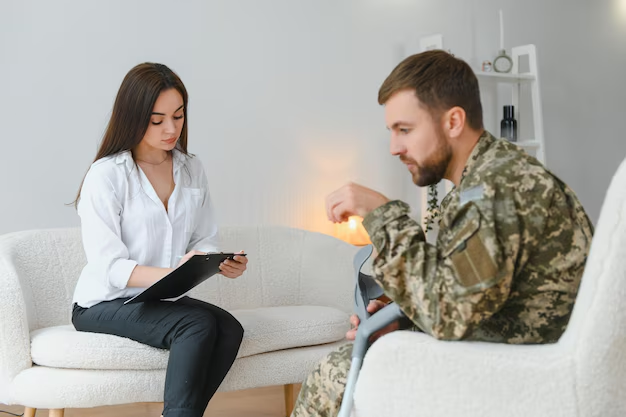
Emergency Help for Veterans in Crisis: How to Get Real-Time Support
If you or a veteran you care about is in immediate danger, call 911 or your local emergency number right now and clearly say, “This is a mental health crisis involving a veteran.” First responders can then route the call appropriately, and in many areas they can request a crisis-trained officer or mental health unit.
For urgent but not 911-level situations, the main official system for veterans in crisis is the U.S. Department of Veterans Affairs (VA), especially the Veterans Crisis Line and your local VA medical center emergency department or VA behavioral health/mental health clinic.
Quick summary: Where to get emergency help as a veteran
- If there is immediate danger: Call 911 and say it is a veteran mental health crisis.
- If you can talk/text: Contact the Veterans Crisis Line (through phone, text, or chat) for free, confidential help.
- If you can get to a facility: Go to the nearest VA medical center Emergency Department or any hospital ER and identify yourself as a veteran.
- If you already use VA care: Call your VA mental health clinic or Primary Care Provider during business hours and ask for a same-day mental health appointment.
- If you’re helping a veteran: Stay with them if safe, remove weapons/means if you can safely do so, and contact the Veterans Crisis Line or 911 with them.
1. Immediate actions if a veteran is in crisis right now
For an immediate, life-threatening emergency (suicidal actions, overdose, violence, confusion, or inability to care for basic safety), the first step is to call 911 or go to the closest emergency room. Tell them the person is a veteran and describe specific behaviors (for example: “he has a firearm,” “she took extra pills,” “he is hearing voices”).
If there is no immediate danger but you are very worried about self-harm, severe depression, panic, or substance crisis, a concrete action you can take today is to contact the Veterans Crisis Line. You can call, text, or use online chat; it is staffed 24/7 by responders trained in veteran-specific issues, including PTSD, TBI, MST, and combat stress.
When you contact the Veterans Crisis Line, they typically:
- Ask if you are safe right now and whether you have any weapons or substances nearby.
- Ask a few short questions about mood, thoughts of self-harm, and recent events.
- Help you create a short safety plan and connect you to local resources, often including your nearest VA medical center or community-based outpatient clinic (CBOC).
If you’re not the veteran but are calling for them, you can say: “I’m calling about a veteran in crisis. I’m worried they may hurt themselves. What can we do right now?” Crisis line staff can guide you on what to say, how to support the person, and when to involve emergency services.
2. Where to go in the official system for crisis help
The main official touchpoints for emergency help for veterans in crisis are:
- VA medical centers and clinics (including emergency departments and mental health clinics).
- The Veterans Crisis Line, which is run by the U.S. Department of Veterans Affairs.
You can typically reach a VA medical center by searching for “VA medical center” plus your city or state and checking that the site ends in .gov. Each facility’s website usually lists an Emergency Department, Mental Health Clinic, Urgent Care, and sometimes a Suicide Prevention Coordinator office.
Common official options include:
- VA Emergency Department (ED) – Handles psychiatric emergencies, overdose, severe withdrawal, and self-harm risk.
- VA Mental Health / Behavioral Health Clinic – For urgent same-day evaluations, medication adjustments, and short-term stabilization.
- VA Primary Care Clinic – Often the entry point; they can do warm hand-offs to mental health or social work during office hours.
- VA Homeless Programs Office (sometimes called Homeless Veterans Program or HUD-VASH team) – For veterans whose crisis is tied to homelessness or imminent loss of housing.
If you are not sure what to say when you call a VA medical center, a simple script is:
“I’m a veteran / calling for a veteran who is in mental health crisis. I need to speak with someone about emergency or same-day mental health help.”
Be aware that exact services and procedures can vary by location and by the veteran’s enrollment or discharge status, so staff may first check basic eligibility and then direct you to the best available option.
3. What to prepare: information and documents that commonly help
For true emergencies, do not delay care to look for paperwork—go to the nearest ER or call 911. However, having certain information and documents ready often speeds things up once you reach the VA or hospital.
Documents you’ll typically need:
- Veteran ID – Such as a VA health care card, Veteran Health Identification Card (VHIC), military ID, or state driver’s license/ID with veteran designation, to help confirm veteran status.
- Discharge paperwork (DD-214) – Commonly requested to verify service era and discharge status, especially if the veteran has never been seen at that VA facility before.
- Medication list or pill bottles – A current list of prescribed medications, dosages, and prescribers (or simply bringing the bottles) so clinicians understand what the veteran is taking and avoid dangerous interactions.
Other items that are commonly very useful in a crisis evaluation include:
- Names and phone numbers for current mental health providers, primary care provider, or case managers.
- A short list of major medical or mental health diagnoses (for example: PTSD, TBI, bipolar disorder, substance use disorders).
- Information about recent stressors (job loss, divorce, legal trouble, housing loss) which you can jot down on paper or in a phone note.
If you do not have a DD-214 or VA ID handy, still go; VA staff can often look up records or use other identifiers, but having full name, date of birth, last four digits of SSN, and branch of service ready will help.
4. Step-by-step: using the VA system for a mental health crisis
Step 1: Decide if this is 911-level or urgent-but-stable
- Check for immediate danger: Active self-harm, threats with a weapon, overdose, severe confusion, or inability to care for self usually require 911 or the nearest ER.
- If not 911-level but serious: Intense suicidal thoughts without a specific plan, panic attacks, severe depression, or relapse in substance use generally call for the Veterans Crisis Line or urgent mental health visit.
What to expect next: 911 dispatchers may send police, EMS, or a crisis intervention team to your location; the Veterans Crisis Line typically stays on the phone or chat with you until a plan is in place and can contact local services if needed.
Step 2: Contact the Veterans Crisis Line
- Make contact by phone, text, or online chat. You can call yourself or ask someone with you to call.
- Answer brief safety questions honestly, including if weapons, medications, or alcohol/drugs are present and whether you have a plan to harm yourself.
What to expect next: Responders usually help create a short safety plan (who you can call, what you can remove from reach, warning signs) and then suggest next steps—this can include going to a VA Emergency Department, scheduling a same-day mental health visit, or involving local first responders if risk is high.
Step 3: Go to a VA medical center or nearest ER
- If directed (or if you already decided), travel to the nearest VA medical center ED or local hospital ER. Bring ID and medications if possible, but do not delay if unsafe.
- Tell the triage nurse you are a veteran in mental health crisis. Mention if the Veterans Crisis Line or any provider told you to come in.
What to expect next: You’ll usually be triaged for medical stability, then seen by a medical provider and often a mental health professional (social worker, psychologist, or psychiatrist). They may ask about suicidal thoughts, substance use, sleep, and recent stressors; this is routine and meant to match you with the right level of care, which can range from discharge with a plan to short-term observation or psychiatric admission.
Step 4: Connect to ongoing VA mental health care
- Ask to be connected to VA mental health services before you leave the ER or urgent visit. Request a follow-up appointment with a VA mental health clinic or social worker.
- If you’re not already enrolled in VA health care, ask how to start enrollment. Staff can usually refer you to the VA eligibility/enrollment office at that facility or provide instructions.
What to expect next: You’ll typically get a follow-up appointment date and contact number. Enrollment or benefits issues might take additional time; you may be asked for DD-214 or other service records, and staff may explain which services are available while enrollment is processed.
Key terms to know:
- VA medical center (VAMC) — A large VA hospital that typically has an Emergency Department, inpatient units, and mental health services for eligible veterans.
- Crisis line — A 24/7 phone, text, or chat service for immediate emotional support and risk assessment, not routine therapy.
- Suicide Prevention Coordinator (SPC) — A VA staff role focused on tracking high-risk veterans and coordinating follow-up care after incidents or crisis calls.
- CBOC (Community-Based Outpatient Clinic) — A smaller VA clinic closer to where veterans live, often providing primary care and some mental health services.
Real-world friction to watch for
Real-world friction to watch for
A common snag is arriving at a VA facility in crisis when you have never enrolled there before or you lack documentation like a DD-214; this can slow down non-emergency paperwork and eligibility checks, but it should not prevent staff from addressing the immediate crisis. If this happens, clearly state that you are in urgent mental health crisis and ask to see emergency or same-day mental health staff first, then work with eligibility or records staff once you are safe and stable.
5. Avoiding scams and getting legitimate follow-up help
Financial stress, disability claims, and housing emergencies often sit underneath a mental health crisis, and veterans are frequently targeted by scammers offering “fast” benefits or housing in exchange for fees. For anything involving money, benefits, or housing, stick to official or accredited sources.
Legitimate help options commonly include:
- VA regional office / Veterans Benefits Administration (VBA) – For disability compensation, pension, and certain emergency financial considerations (not instant, but critical for long-term stability).
- VA Homeless Programs or HUD-VASH team – For veterans who are homeless or at risk of homelessness; they can discuss shelters, transitional housing, and voucher programs.
- Accredited Veterans Service Organizations (VSOs) – Such as state veterans affairs offices, county veterans service offices, or national VSOs that are officially recognized to help with claims and appeals without charging you illegal “upfront” fees.
- Local community mental health centers – County or city-funded clinics that provide low-cost or sliding-scale mental health services, sometimes in partnership with VA.
To avoid scams:
- Look for websites and email addresses ending in .gov for federal, state, or county offices, or established nonprofit organizations.
- Be cautious if someone guarantees benefit approvals, back pay amounts, or fast disability ratings in exchange for high “consulting” fees.
- If unsure whether a helper is legitimate, you can call your VA regional office or local county/state veterans service office and ask whether that organization or individual is accredited or recognized.
Once you’re out of immediate crisis, a solid next step is to schedule a follow-up visit with your VA mental health provider or primary care provider and ask specifically about: safety planning, therapy or groups that fit your needs, medication review, and connections to housing, employment, or financial counseling supports. This combination of emergency stabilization plus structured follow-up is what typically helps veterans move from “just surviving” the crisis toward more stable, longer-term support.